
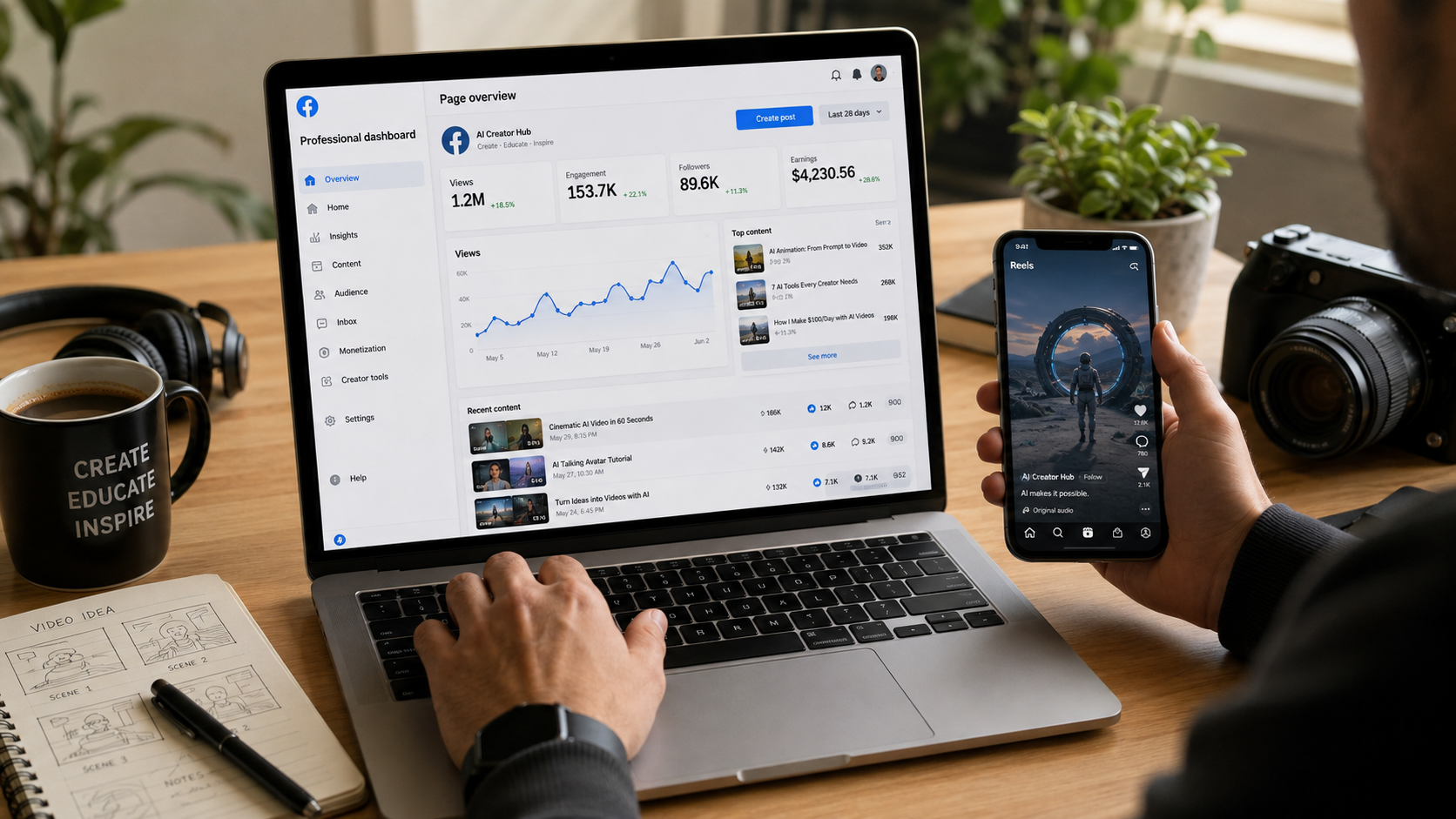
How to Make Money on Facebook With AI Videos in 2026
Learn how to make money on Facebook with AI videos in 2026, from Facebook Content Monetization and profitable video ideas to AI-powered production strategies. Discover how to create original, high-quality content, follow Meta’s policies, and build sustainable revenue with tools like Sondo AI.
AI has made video production far more accessible, while Facebook is also changing how video works on the platform. Meta announced that new Facebook videos would progressively be shared as Reels, bringing video and Reels publishing into a more unified experience. This does not mean Facebook is becoming a short-video-only platform: Reels can support different lengths and formats, alongside longer videos and Live content.
The monetization opportunity remains significant. Meta reported that Facebook paid creators nearly $3 billion in 2025, with around 60% of payouts coming from Reels. For creators looking to make money on Facebook with AI videos, this makes Reels an important part of a broader content strategy.
However, simply generating and uploading AI videos does not guarantee revenue. Successful Facebook Reels monetization increasingly depends on original content, audience engagement, watch time, and qualified views. AI is therefore most valuable as a production tool that helps creators develop better content—not as a shortcut for repetitive or recycled videos.
What Has Changed With Facebook Video?
Facebook has been simplifying video publishing around Reels. Meta announced that new Facebook videos would progressively be shared as Reels, without fixed length or format restrictions under the updated system.
At the same time, Meta consolidated several earlier programs—including In-stream Ads, Ads on Reels, and Performance Bonus—into Facebook Content Monetization.
As of Meta's 2026 updates, the program remains invite-only, and creators should check their Professional Dashboard for account-specific eligibility.
Meta has also strengthened its focus on originality. Reposting, lightly editing, or repackaging other creators' content may reduce distribution and monetization opportunities.
How Can You Make Money From Facebook Videos?
Facebook video revenue does not have to come from one source.
1. Facebook Content Monetization
Eligible creators can earn from qualifying Reels and other supported Facebook content based on performance.
Meta now highlights metrics such as Qualified Views, Earnings Rate, and watch time, so total view count alone should not be treated as a guaranteed earnings indicator.
2. Stars and Subscriptions
Creators with loyal audiences may also earn through Facebook Stars or paid Subscriptions, where available.
These models work especially well for creators publishing recurring content, educational series, entertainment, music, or community-driven videos.
3. Brand Partnerships
A focused audience can attract sponsorships and branded-content opportunities.
Creators should clearly disclose paid partnerships and follow Meta's branded-content rules.
4. Affiliate Marketing
Tutorials, software reviews, product demonstrations, and educational videos can generate affiliate revenue when viewers follow appropriately disclosed links.
5. Products and Services
Facebook can also work as a traffic source.
A typical funnel may look like:
Video → Audience Interest → Website → Product or Service
For many creators, this can be more valuable than relying only on platform payouts.
What Types of Facebook Videos Have Strong Monetization Potential?
Educational and How-To Videos
Educational content can support multiple monetization paths, including platform revenue, affiliate products, digital courses, consulting, and sponsorships.
Popular formats include software tutorials, AI tutorials, language lessons, cooking, DIY projects, productivity workflows, and practical explainers.
Entertainment and Storytelling
AI is well suited to visual storytelling because it can help create scenes that would otherwise require actors, locations, animation, or visual effects.
Creators can experiment with animated stories, fictional characters, fantasy worlds, science-fiction concepts, comedy series, and original micro-dramas.
The goal should be to build recognizable characters, visual styles, or storytelling formats rather than simply generate more videos. This also aligns with Meta's emphasis on meaningful originality, while recycled or lightly modified content may have lower distribution and monetization potential.
Music and Visual Content
Music is a natural category for AI-assisted video. Creators can produce original songs, visualizers, lyric videos, narrative music videos, mood-based clips, and vertical music Reels.
AI can reduce filming and post-production work by generating visuals around an existing song. For example, Sondo supports both 16:9 and 9:16 formats and allows creators to edit storylines, rearrange clips, modify titles and lyric subtitles, and regenerate individual video clips.
Lifestyle and Personal Development
Fitness, productivity, routines, self-improvement, travel, and personal storytelling can also support repeatable Facebook content.
AI works best when it enhances the creator's existing voice, such as using animation to explain ideas or generative video as supporting B-roll. Generic motivational videos built from recycled footage and interchangeable quotes are easier to copy and less likely to build a distinctive audience.
Product Demonstrations and Niche Expertise
Product demos and expert content can be valuable when they solve a clear audience problem.
Creators can use AI to visualize software workflows, product use cases, creative processes, or concepts that are difficult to film. These videos can naturally support brand partnerships, affiliate revenue, products, services, or Facebook's own monetization tools.
How to Make Money on Facebook With AI Videos
AI can improve nearly every stage of content production, but profitability depends on how those stages work together.
Starting with the monetization model helps creators avoid producing large amounts of content without a clear commercial path.
Step 1: Choose Your Monetization Model First
Before choosing an AI video concept, decide what you want the content to achieve.
For Facebook Content Monetization, focus on content that can generate eligible, meaningful viewing. For affiliate income, create videos around relevant problems or purchasing intent. If you sell services, use content to demonstrate expertise and build trust. Musicians can use Facebook as part of a broader funnel toward music, merchandise, subscriptions, or future releases.
This helps avoid a common mistake: chasing viral views first and thinking about monetization later.
Step 2: Use AI for Research, Ideation, and Scripting
Generative AI can speed up pre-production by helping creators explore audience questions, develop hooks, outline scripts, generate story concepts, and structure scenes.
However, creators should still make the final editorial decisions. A strong workflow uses AI to expand creative options, then manually refines the best ideas.
For factual content, AI-assisted research should support source verification, not replace it.
Step 3: Create Original AI Visuals
AI video is most valuable when it makes difficult or expensive visual ideas easier to produce.
Instead of relying on stock footage or recycled viral clips, creators can generate original environments, animated characters, fictional scenes, visual metaphors, and stylized sequences.
This approach is more aligned with Facebook's emphasis on original content. Meta may deprioritize duplicate content or minor edits to other creators' work, while repeated unoriginal publishing can also affect monetization.
The better question is not:
"How many AI videos can I generate today?"
But:
"What can AI help me create that gives this audience something new?"
Step 4: Turn Music Into Social Video With AI
Music is a good example of how AI can reduce production effort without replacing creative direction.
If you already have an original song, an AI music-video workflow can help turn it into visual storytelling for social platforms.
With SondoAI, creators can upload music, select an aspect ratio, develop or modify the storyline, replace individual clips, rearrange scenes, and edit titles or lyric subtitles. Sondo supports both horizontal 16:9 and vertical 9:16 output.
For a Facebook-first workflow, vertical video can work well for mobile viewing, while horizontal versions may suit other distribution needs.
AI supports production, but the creator still defines the concept, audience, visual identity, narrative, hook, publishing plan, and monetization strategy.
That creative direction is what turns an AI-generated asset into meaningful creator-led content.
Facebook AI Video Strategy: How to Grow Revenue Over Time
A sustainable Facebook AI video monetization strategy should focus on long-term audience value, not short-term viral spikes. The goal is to build repeatable content, improve viewing quality, and diversify revenue.
Build Repeatable Content Series
Recurring formats make content easier to produce and easier for audiences to recognize.
Examples include AI history series, weekly music visuals, or short AI tutorials. Keep the format consistent while changing the topic or story in each episode.
The goal is consistency—not mass-producing nearly identical videos.
Optimize for Qualified Views
Total views alone do not determine monetization value.
Facebook Content Monetization tracks metrics such as Qualified Views and Earnings Rate, while Meta increasingly emphasizes originality, watch time, and meaningful engagement.
Focus on retention, audience fit, and content quality rather than clickbait. A smaller number of engaged viewers can be more valuable than a viral audience that quickly leaves.
Test Different Facebook Video Lengths
There is no single ideal Facebook video length.
Short videos can work well for discovery, quick tutorials, and visual hooks, while longer videos may suit storytelling, music, and educational content.
Test both formats and use watch-time and retention data to determine what works best for your audience.
Diversify Your Revenue
Do not rely on one monetization source.
Facebook Content Monetization can be combined with Stars, subscriptions, brand partnerships, affiliate marketing, products, services, or music revenue.
The right mix depends on your audience and business model.
Avoid AI Content Farms
AI can increase production speed, but it should not be used to create repetitive or spammy content at scale.
Meta may reduce the reach or monetization eligibility of accounts that rely on low-value, duplicated, or manipulative content.
A simple rule for long-term AI video monetization is:
Use AI to scale creativity, not spam.
Quality, originality, audience relevance, and consistency matter more than publishing volume alone.
Start Monetizing Your AI Videos
In 2026, AI video tools like Sondo AI are making content creation faster and more accessible, helping creators turn ideas into high-quality videos with less production effort. To build sustainable revenue, focus on creating content that delivers real value, respects Meta's platform policies, and keeps your audience engaged. Start creating smarter with AI—and turn better content into real monetization opportunities.
FAQ
Can AI-generated videos be monetized on Facebook?
Yes, AI-generated videos can potentially be monetized on Facebook if they meet Meta's eligibility and content requirements. The use of AI itself does not automatically make a video ineligible. However, creators still need to follow Meta's rules on originality, copyright, authenticity, and monetization. Low-value, repetitive, or recycled AI content may have limited distribution or monetization potential.
How many followers do I need?
There is no single universal follower threshold for Facebook Content Monetization. Eligibility can depend on your account status, region, content history, and whether Meta has made the program available to you. As of Meta's current guidance, Facebook Content Monetization remains invite-based for many creators. The best place to check your status is the Monetization section of your Professional Dashboard.
Does Facebook pay for Reels?
Yes, eligible creators can earn money from qualifying Reels through Facebook Content Monetization. Earnings are performance-based rather than tied to one guaranteed rate per view. Meta now places greater emphasis on factors such as qualified views, watch time, engagement, and originality. This means a Reel with strong audience retention and meaningful engagement may be more valuable than one with high views but weak viewer quality.
Can faceless AI videos make money?
Yes, faceless AI videos can potentially make money on Facebook if they provide meaningful original value. Creators do not need to appear on camera for content to be engaging or commercially useful. Formats such as AI animation, storytelling, tutorials, music videos, and product explainers can all work without showing a face. The key is to avoid low-effort, copied, or minimally edited content.
Do AI videos need labels?
Meta may apply an AI info label to certain AI-generated or significantly altered content. Labels can be based on technical signals, industry standards, or creator disclosure. Creators should be especially careful with realistic synthetic media involving real people, events, politics, or other sensitive topics. Before publishing, it is a good idea to review Meta's latest AI transparency guidance and disclosure requirements.