
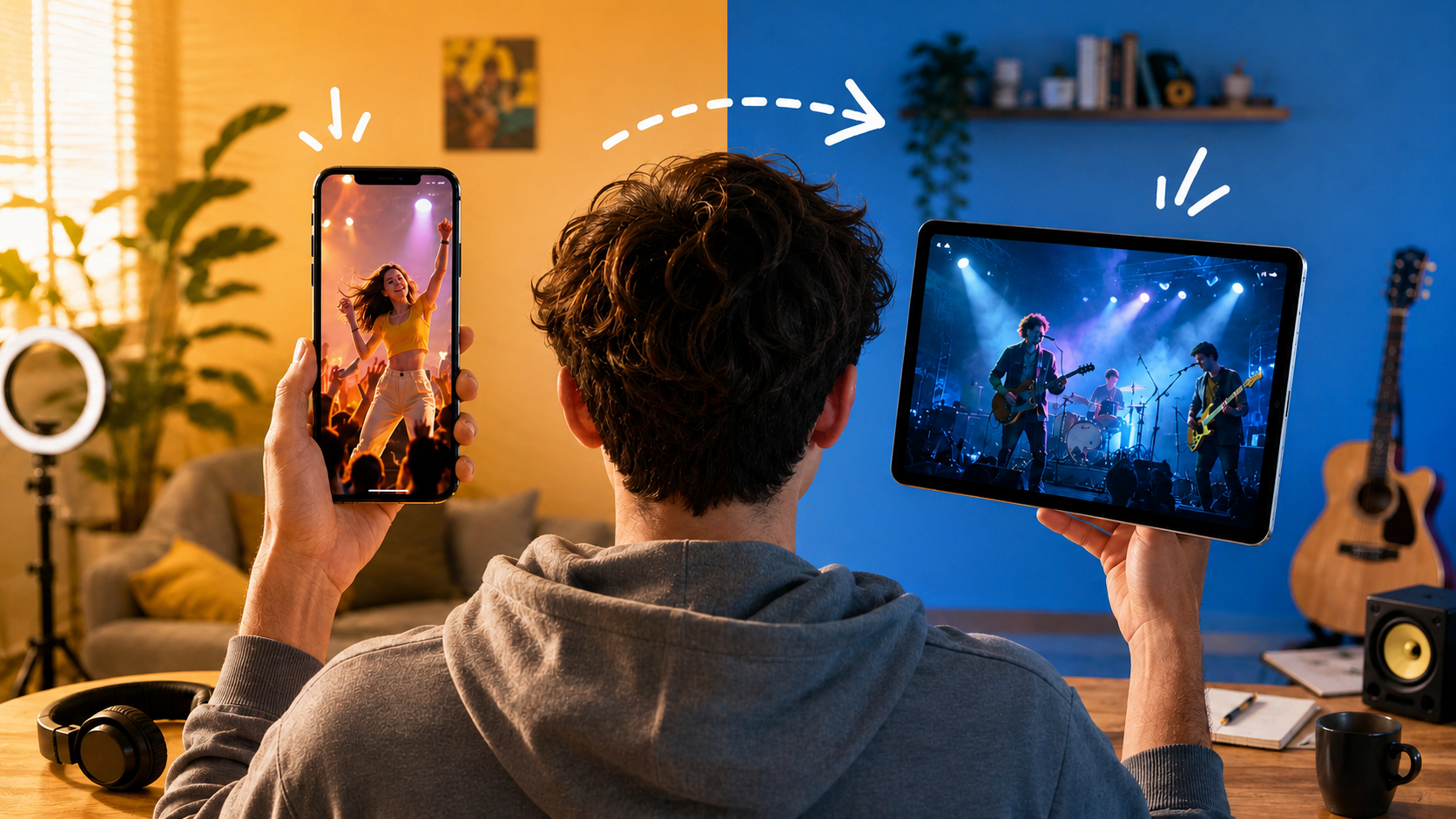
Vertical VS. Horizontal Music Videos: Which Format Is Best for Creators in 2026?
With the rise of AI music video generators, creators can now produce professional-looking music videos in multiple aspect ratios for different platforms. Choosing the right aspect ratio can make a major difference in how your music video performs across platforms. This guide compares vertical (9:16) and horizontal (16:9) music videos, and how creators can choose the best format for TikTok, YouTube, Instagram, and professional releases.
Music videos are no longer limited to a single-screen format.
In the past, most music videos were created in a horizontal (16:9) format. However, with the rise of smartphones and short-form video platforms, vertical (9:16) videos have quickly become the standard format for platforms like TikTok, YouTube Shorts, and Instagram Reels.
So, which format is better for your project?
The answer depends on two key factors: where your audience watches your content and what kind of viewing experience you want to create.
Choosing the right aspect ratio not only affects how your video looks but also influences audience engagement and overall performance. In this guide, we’ll compare vertical and horizontal music videos to help you choose the best format for your next project.
Why Music Video Aspect Ratio Matters for Creators
Aspect ratio affects much more than the appearance of a video — it directly shapes the way content is composed and experienced. It influences framing, visual focus, and how well a video fits different screens.
Videos designed specifically for each platform are easier to watch, keep viewers engaged for longer, and deliver visuals more effectively. The same music video can perform very differently simply because of the format in which it is exported.
When choosing an aspect ratio, consider these factors:
Your primary publishing platform
Your storytelling style
How your audience consumes content
Vertical vs. Horizontal Music Videos
Vertical Music Videos (9:16)
Vertical videos are designed specifically for mobile viewing. They take advantage of the entire smartphone screen, allowing viewers to focus more on the main subject and creating a more immersive and interactive experience.
Compared with horizontal videos, vertical formats are better suited for highlighting performers, dance movements, facial expressions, and close-up shots. This makes them the dominant format for short-form music content.
Vertical music videos are ideal for platforms such as TikTok, YouTube Shorts, Instagram Reels, and Facebook Reels. These mobile-first platforms display vertical content in full-screen mode, creating a more engaging viewing experience.
In addition, vertical videos naturally emphasize performance and movement while matching the way users scroll through content on their phones. As a result, they are often more effective at capturing attention and encouraging higher engagement.
Horizontal Music Videos (16:9)
Horizontal videos remain the standard format for official music videos and long-form content.
The wider frame provides more space for visual storytelling, allowing creators to showcase environments, build cinematic scenes, and create a stronger sense of depth. The horizontal format is especially effective for storytelling-driven music videos that require rich backgrounds and complex compositions.
Horizontal music videos are commonly published on YouTube, artist websites, and streaming platforms. These platforms are designed for longer viewing sessions and allow creators to fully utilize the advantages of widescreen visuals.
The wider composition creates a stronger relationship between characters and their surroundings, giving creators more flexibility with camera movement and cinematic storytelling. In addition, horizontal videos provide a more natural viewing experience on larger screens such as computers, TVs, and projectors, making them the preferred choice for professional music video production.
Vertical or Horizontal? How Should You Choose?
There is no format that is universally better — the right choice depends on your creative goals.
If your goal is to grow on short-form platforms and create engaging mobile-first content, vertical video is usually the better choice.
If you want to create a professional music video, tell a complete story, or achieve a cinematic visual style, horizontal video is often the better option.
Today, many creators produce both versions of the same project:
16:9 for YouTube and official websites
9:16 for TikTok, YouTube Shorts, and Instagram Reels
This approach allows creators to maintain visual quality while reaching audiences across multiple platforms.
Create Vertical and Horizontal AI Music Videos with One Workflow
In the past, creating multiple versions of the same music video required additional editing, reframing, and manual adjustments.
Today, AI has significantly simplified this process.
AI-powered music video tools are making this process easier. Platforms like Sondo AI, a leading AI music video generator, allow creators to generate videos in both 16:9 and 9:16 formats, making it easier to adapt one creative idea for multiple platforms.
Whether you choose vertical or horizontal, the most important factor is not the format itself — but creating a music video that matches your creative vision while fitting the way your audience watches content.