
8 Best Narrative Music Videos of 2026
Explore eight music video ideas for 2026. Find fresh ways to turn a song into an original story.
A love story can survive seven impossible days, a hospital can give heartbreak a physical form, and a chase can turn into a dance. These music video ideas make emotions visible through conflict, absurdity, and unexpected reversals. Drawing on recent releases and hits, the following eight concepts offer starting points for original stories.
1. Build a Romance Across Seven Impossible Days
Jung Kook’s Seven (feat. Latto) organizes a romantic pursuit across a week of escalating mishaps. Arguments, disasters, and an apparent death fail to end the pursuit; the return at the funeral pushes the story into absurd comedy.
A repeating structure gives each encounter a familiar purpose while leaving room for surprise. For an original concept, a character could keep trying to repair one mistake as each attempt creates another complication. The ending gains impact when it changes the audience’s expectations of the pattern.
2. Tell the Story Through a Ghost Who Knows the Truth
In Taylor Swift’s Patient Zero, a ghost watches another woman enter the dangerous relationship that ended her own life. The former partner recognizes the abuse and poisoning before the current partner understands what is happening. That difference in knowledge creates suspense.
The useful creative device is the informed observer. A scene can show one character’s apparent comfort alongside another’s alarm. Preparing a character reference for each person helps define their appearance, while clear descriptions establish their positions, expressions, and contrasting responses within the scene.
3. Reverse the Power in a Supernatural Revenge Story
Ariana Grande’s hate that i made you love me turns a burial into a haunting that ultimately reverses the characters’ positions. The ghost’s return makes an attempt to erase the past impossible, giving the relationship a supernatural consequence.
This offers a way to build a story around changing control. Early scenes establish who appears powerful; later scenes undermine that position through repeated disturbances. The final reversal should follow the same visual logic, so the audience recognizes how the relationship has changed.
4. Let One Bad Night Expose a Character’s Insecurities
Tame Impala’s Loser follows its protagonist into an increasingly uncomfortable night after a relationship argument. The appeal lies in the accumulation of awkward encounters and the character’s growing sense of inadequacy.
A music video can use that approach to make an internal struggle visible. A few connected situations can gradually change the protagonist’s posture, reactions, and confidence. The song’s intensity can help determine when embarrassment becomes frustration and when a quieter moment allows the character’s uncertainty to register.
5. Make Group Movement Express Collective Pressure
GENER8ION’s STORM, starring Yung Lean, places adolescent aggression inside a British boys’ boarding school set in 2034. Its striking group-movement climax gives the tension of the surrounding world a shared physical form.
The creative lesson extends beyond choreography: a crowd can communicate belonging, pressure, or isolation through its relationship with one person. An original sequence can explore matching uniforms, repeated poses, or a protagonist standing apart. Simple, readable arrangements can carry the idea through changes in the music.
6. Build a Physical World Around an Emotional Metaphor
Olivia Rodrigo’s the cure places the search for a heartbreak remedy inside a handmade cardboard hospital. Its nurse, damaged hearts, and unraveling materials give emotional distress a tactile setting. The collapsing world can be read as a rejection of love as a universal cure.
A strong metaphor can guide the entire visual design. Creators can choose a material, setting, and recurring object that belong to the same idea, then describe those qualities consistently. The protagonist’s actions should reveal how the relationship with that world develops.
7. Turn a Confrontation into an Unexpected Dance
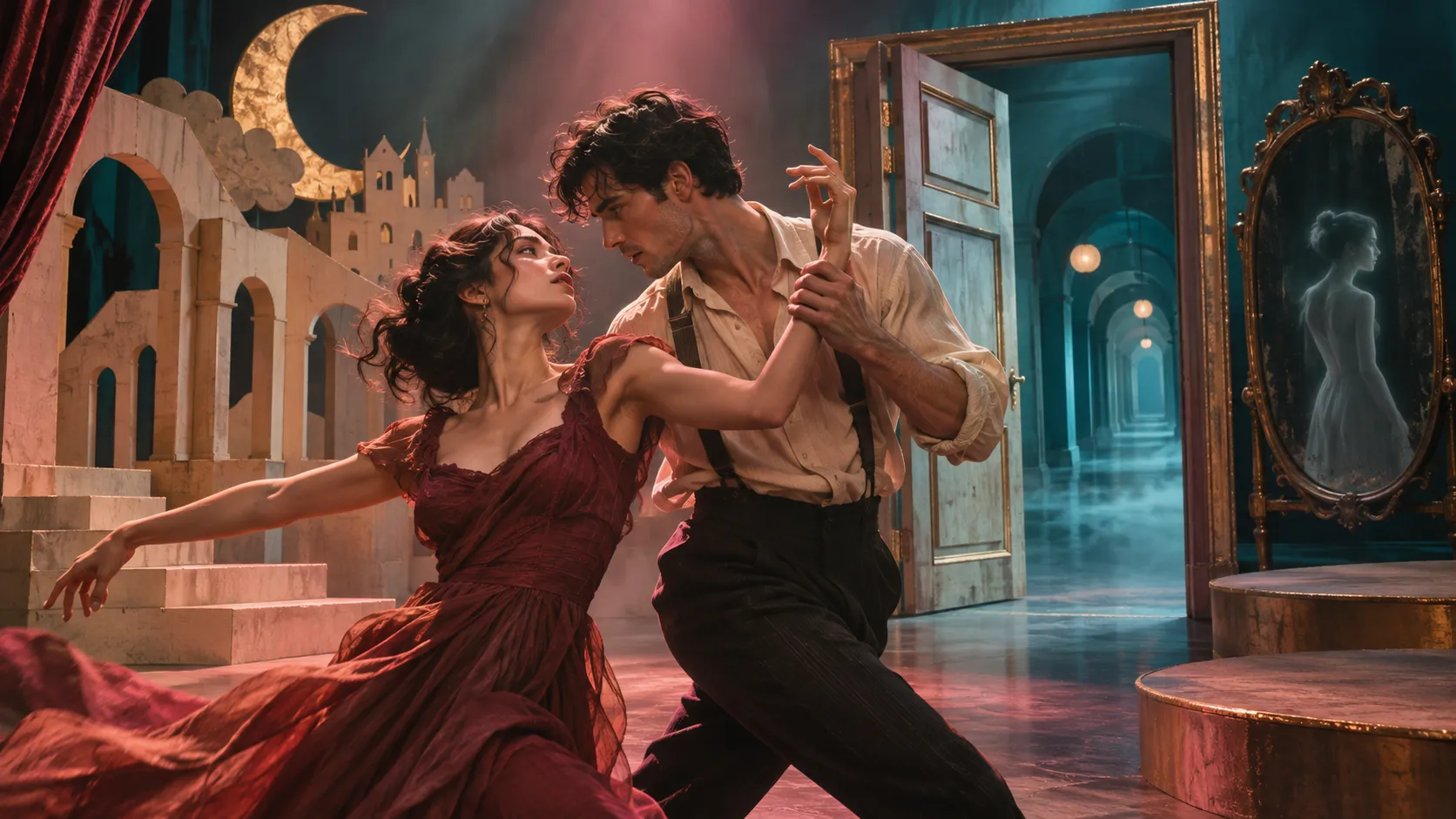
Harry Styles’ Aperture transforms a hotel pursuit and struggle into coordinated movement, including a theatrical lift. The surprise comes from a change in the characters’ relationship: movements that suggest danger begin to suggest cooperation.
That tonal turn gives a musical climax a story function. In an original sequence, tension can shift through a returned gesture or a shared action. Creators can edit the storyboard to clarify who initiates the interaction and how the other person responds, giving the change from conflict to cooperation a readable progression.
8. Turn Dating Expectations into a Fictional Game Show
Olivia Rodrigo’s expectations, featuring Chappell Roan, stages relationship expectations through a retro television competition. Contestants, a host, and game-show conventions turn romantic evaluation into something visibly structured and performative.
A fictional format gives satire a clear set of rules. Creators can invent a contest with rounds that expose different pressures, then let the protagonist challenge those rules. The visual interest comes from the contrast between cheerful presentation and the discomfort of being judged.
Creators can create an AI music video with Sondo using a song, suitable character references, and a clear description of the story. The story description can also be left blank, giving AI room to dream up the plot. Grab a cup of coffee and let AI handle the work.
FAQ
How can a song become a music video storyline?
Its mood, tempo, and changes in intensity can guide the character’s conflict, turning point, and ending.
Can a music video combine humor, romance, and suspense?
Yes. A clear character goal and a consistent visual world help different tones feel connected.
How can these concepts become an original music video?
Creators can upload music and character references, describe a story, and refine individual shot descriptions after generation.