
What Is an AI Video Ad and How Does It Work?
Learn what AI advertising videos are, how AI video generation works, and how to create product ads with Sondo AI using music, product images, and prompts.
Video has become one of the most common formats for digital advertising. Brands use it to introduce products, demonstrate features, communicate a lifestyle, and capture attention across social media, websites, app stores, and paid campaigns.
Traditionally, producing an advertising video could involve a creative concept, script, shooting location, actors, product photography, lighting, editing, music, and post-production. AI video generation changes part of this workflow by allowing creators to turn product images, text instructions, music, and other reference materials into short-form video content without filming every scene manually.
So what exactly is an AI video ad, and how does the technology work?
What Is a Video Ad?
A video ad is a piece of video content designed to introduce, promote, or explain a product, service, or brand. Unlike general entertainment content, video ads usually have a specific communication goal, such as highlighting a product feature, creating brand awareness, demonstrating how something works, or encouraging viewers to take an action.
The format can range from a five-second social media clip to a longer product campaign. Some ads focus heavily on the product itself, while others use people, environments, music, and storytelling to build a particular mood around the brand.
AI video ads follow the same basic principle. The main difference is that some or all of the visual production is created with generative AI instead of being captured entirely through traditional filming.
Common Types of Video Ads
Video ads can take many forms depending on the product and platform.
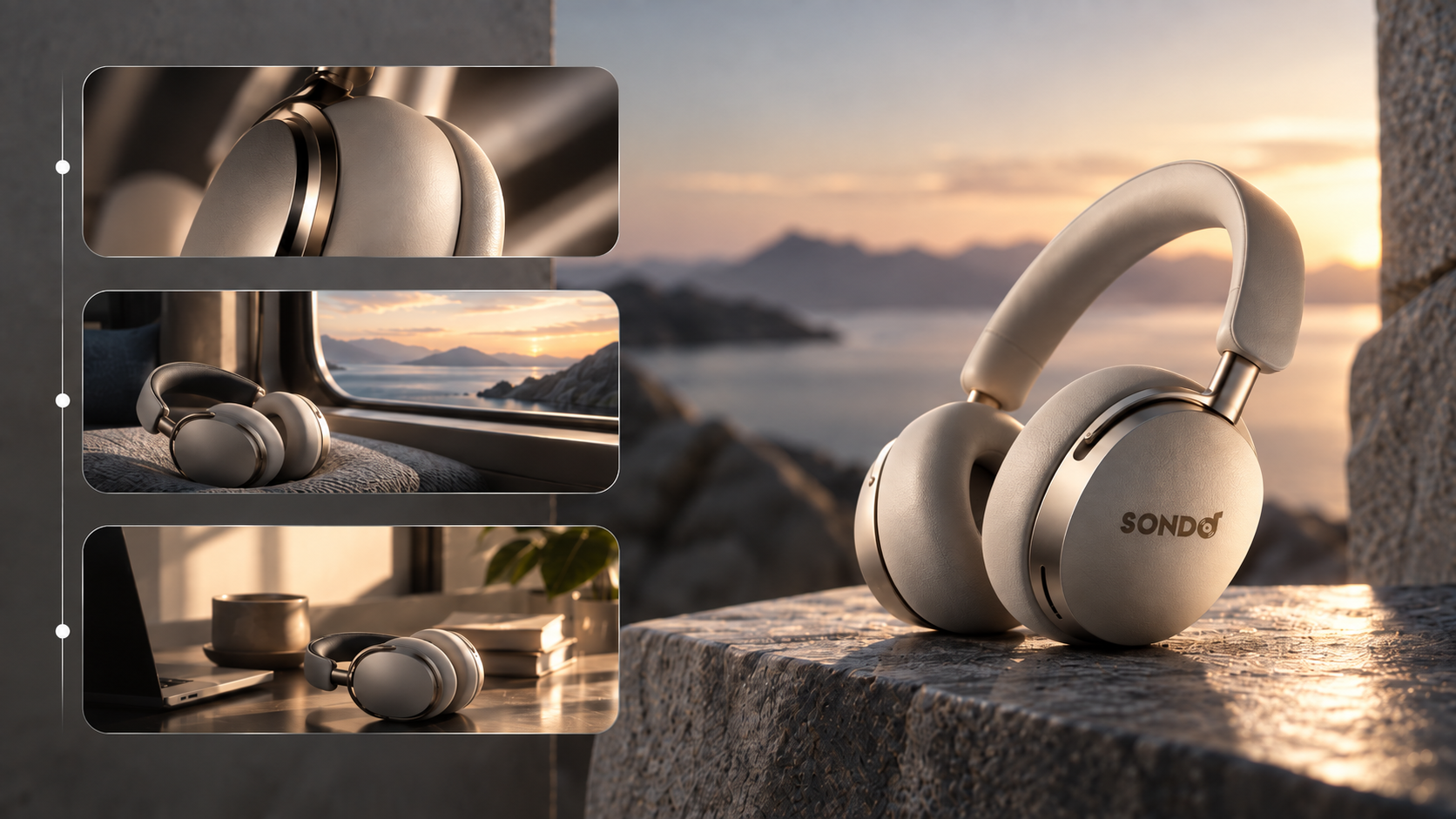
Product showcase videos place the product at the center of the frame and use close-ups, lighting, camera movement, and different environments to highlight its appearance and design.
Lifestyle ads show a product within a broader situation, such as headphones used during a commute, sportswear worn during training, or a drink served at a social gathering. The goal is to connect the product with a particular experience or audience.
Feature-focused videos concentrate on specific selling points. These may use close-ups, visual demonstrations, short text overlays, or scene changes to communicate benefits such as portability, durability, sound quality, speed, or design.
Social media ads are usually shorter and faster. They often rely on a strong opening visual, rhythmic editing, vertical formats, and simple messaging that viewers can understand within seconds.
Story-driven ads place the product inside a short narrative. Instead of explaining every feature directly, the video creates a situation or emotion that helps establish the brand identity.
AI tools can support each of these formats, particularly when creators need multiple concepts, visual variations, or short videos for different platforms.
How Does AI Video Ad Generation Work?
AI video models learn patterns from large collections of visual and language data. Through this training, they develop an understanding of what objects typically look like, how people and cameras move, how lighting changes, and how scenes evolve over time.
When a user enters a prompt or provides reference materials, the model interprets information such as the requested subject, action, environment, composition, camera behavior, and visual style.
Unlike an image generator, however, an AI video model is not creating just one static frame. It generates a sequence of related frames that together form moving footage.
These frames need to remain connected over time. A product should retain its basic appearance as the camera moves, lighting should change naturally, and objects should not suddenly change position, shape, or scale without a reason.
This is known as temporal consistency, and it remains one of the central challenges in generative video. A single frame may look convincing on its own while the overall clip still feels unnatural if objects change unexpectedly or motion between frames is inconsistent.
For AI video ads, consistency becomes particularly important because viewers need to recognize the same product throughout the video.
How Sondo AI Supports the Workflow
Sondo AI brings music analysis and AI video generation into the same workflow. Creators can provide a soundtrack, a product image, and video instructions, while Sondo AI analyzes the audio to better understand elements such as rhythm, pacing, mood, and changes in musical intensity. These signals can help guide the timing and visual progression of the video.
For AI video ads, this is especially useful for music-driven product content. Instead of treating the soundtrack as a separate layer added after the visuals are created, the music can help shape how the video develops.
The product image provides a visual reference, while the prompt defines the desired setting, camera movement, lighting, and overall style. By combining these inputs with audio analysis, Sondo AI can create visuals that feel more closely aligned with the soundtrack and the intended advertising concept.
The generated video can then be reviewed and refined before being prepared for social media, paid campaigns, product launches, or other marketing channels.
How to Create an AI Video Ad
Creating an AI video ad with Sondo AI can be broken down into five simple steps.
Step 1: Prepare a Soundtrack
Start with music that matches the identity of the product. A premium technology product may work well with cinematic electronic or atmospheric music, while a lifestyle product may benefit from something lighter, warmer, or more energetic.
The rhythm of the music can also help determine the pacing of cuts, transitions, and product reveals.
Step 2: Prepare a Clean Product Image
Use a clear, high-quality image that accurately represents the product. Avoid unnecessary objects, complicated backgrounds, heavy text, or visual elements that could confuse the model.
A clean reference gives the AI a stronger foundation for maintaining the product's appearance throughout the video.
Step 3: Write the Video Prompt
Describe what should happen rather than relying only on broad style words.
For example, specify the environment, product placement, camera movement, lighting, transitions, close-ups, and overall mood. If text needs to appear, describe when it appears and keep typography consistent across scenes.
Prompts should provide direction without trying to control every frame individually.
Step 4: Generate the Video
Upload the music and product reference to Sondo AI, enter the video instructions, and let the system generate the visual sequence.
AI handles much of the scene creation and motion generation, reducing the amount of footage that needs to be filmed manually.
Step 5: Review and Publish
Always review the generated video before publishing it. Check product consistency, proportions, text accuracy, transitions, camera movement, and whether the visuals support the intended message.
If necessary, regenerate or adjust individual creative directions before exporting the final version.
How to Get Better Results from AI Video Ads
Strong source materials usually produce stronger results. Use high-resolution product images, keep backgrounds relatively simple, and make sure the product is clearly visible.
Prompts should also prioritize the most important information. Instead of requesting many complicated actions in the same scene, focus on a few clear visual ideas. For example, a slow product rotation, a close-up of a design detail, and a clean lifestyle scene will often be easier to control than a sequence containing several characters, environments, and rapid object interactions.
Camera language can make prompts more precise. Terms such as slow push-in, macro close-up, side tracking shot, low-angle product shot, shallow depth of field, and smooth orbit describe how the viewer should see the product rather than simply describing the product itself.
Finally, treat AI generation as part of a creative workflow rather than a one-click replacement for review. Small changes to the reference image, prompt, pacing, or music can significantly affect the final result.
FAQ
What is an AI video ad?
An AI video ad is promotional video content created partly or entirely with generative AI using inputs such as text prompts, product images, music, or other references.
Do I need professional filming equipment?
AI video tools can generate scenes without traditional filming equipment, although high-quality source images and clear creative direction are still important.
What should I prepare before generating an AI video ad?
For a simple Sondo AI workflow, prepare a soundtrack, a clear product image, and a concise prompt describing the desired scenes, motion, lighting, and overall visual direction.