
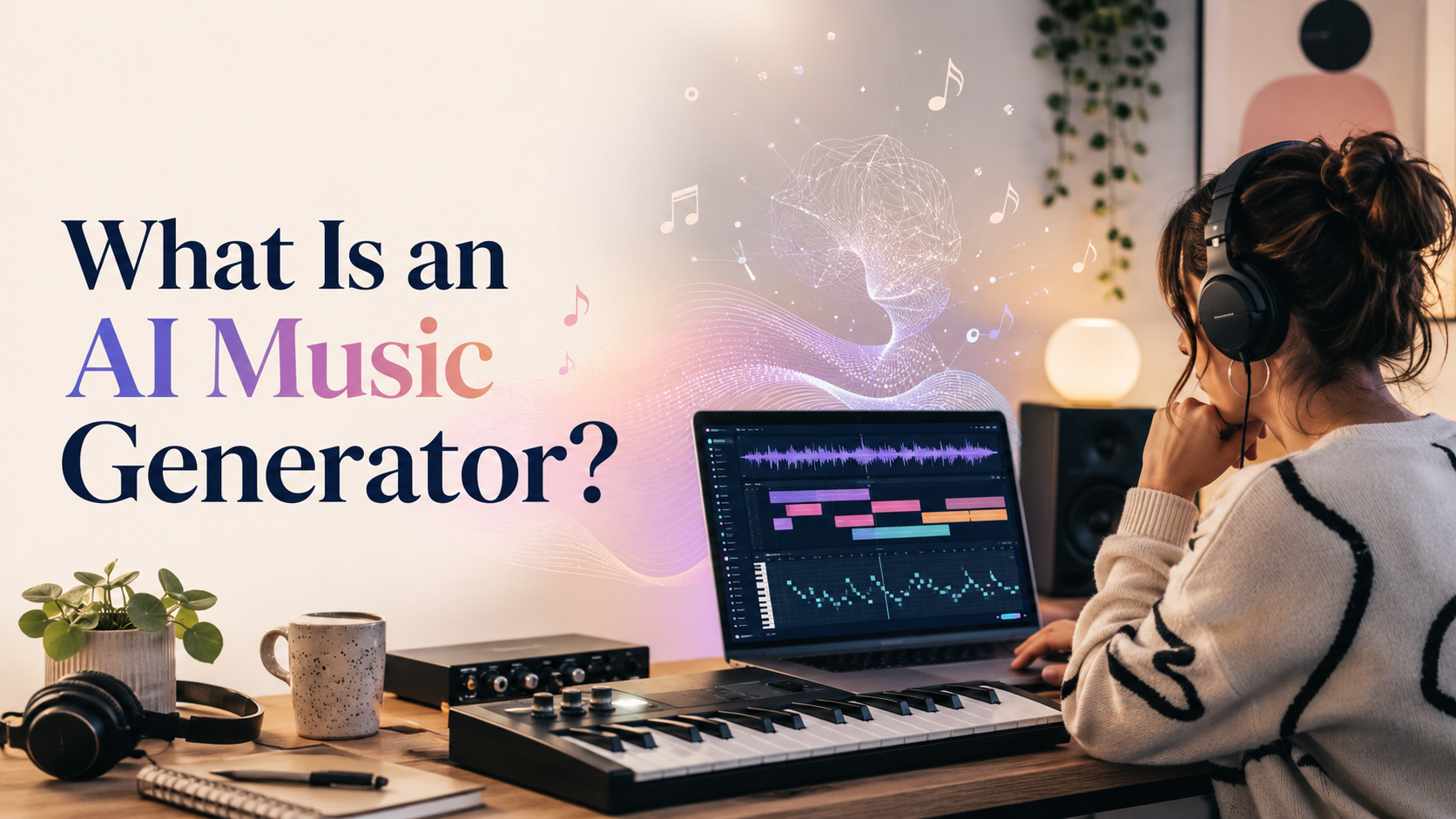
What Is an AI Music Generator? A Guide to Creating Music with AI
Discover what an AI music generator is, how AI creates original songs, and how creators can use AI tools to generate melodies, lyrics, and complete music tracks.
Creating music has always been a combination of creativity, emotion, and technical skills. Traditionally, producing a complete song required knowledge of songwriting, composition, recording, and music production. But with the development of artificial intelligence, the way people create music is changing.
An AI music generator allows creators to transform ideas, lyrics, or simple descriptions into original music using artificial intelligence. From generating melodies and harmonies to creating complete songs with vocals and instrumentation, AI tools are making music creation more accessible for artists, content creators, and beginners.
Whether you want to explore a new musical idea, create a demo, or experiment with different genres, AI music generators provide a faster way to turn imagination into sound.
What Is an AI Music Generator?
An AI music generator is a tool that uses artificial intelligence to create music based on user input. Instead of manually composing every part of a song, users can describe what they want to create, and AI generates music that matches those creative directions.
Depending on the tool, AI music generators can help create:
Melodies and chord progressions — generating musical ideas and arrangements
Instrumental tracks — creating beats, background music, and complete compositions
Lyrics and songwriting concepts — developing themes, structures, and lyrical ideas
AI vocals — generating vocal performances with different styles and characteristics
For example, a creator can describe:
“An emotional pop ballad with piano, soft vocals, and a cinematic atmosphere.”
The AI analyzes these creative elements and generates a song based on the requested style.
Rather than replacing the creative process, AI music generators work as a creative assistant, helping users explore more possibilities and develop ideas faster.
How Does an AI Music Generator Work?
AI music generators are trained on large amounts of musical information, allowing them to understand patterns in music, including:
Melody and harmony
Rhythm and tempo
Song structure
Instrument combinations
Genre characteristics
Vocal expression
When users provide a prompt, the AI interprets the description and generates music based on these learned patterns.
A typical AI music creation process includes:
1. Understanding Creative Input
Users provide information such as:
Music genre
Mood or emotion
Tempo
Instrument preference
Vocal style
Song concept
For example:
“A nostalgic indie pop song about memories of youth, featuring acoustic guitar and warm vocals.”
The AI uses these details to understand the intended direction.
2. Generating Musical Elements
Based on the prompt, AI can create different parts of a song:
Main melody
Chord progression
Rhythm patterns
Instrument layers
Vocal arrangement
This allows creators to quickly experiment with different versions of the same idea.
3. Refining and Exploring Ideas
Music creation is often an iterative process. Creators can adjust their concepts, try different styles, or generate alternative versions until they find the right direction.
For example, the same song idea could become:
A soft acoustic version
An energetic pop track
A cinematic soundtrack
A modern R&B song
AI makes it easier to explore creative possibilities without starting from scratch every time.
What Can You Create with an AI Music Generator?
1. Original Songs
One of the most popular uses of AI music generators is creating complete songs.
Songwriters and artists can use AI to:
Generate early demos
Explore new musical directions
Test different genres
Develop songwriting ideas
For independent artists, AI can help speed up the creative process, making it easier to move from an initial concept to a finished track.
2. Music from Lyrics or Ideas
Many songs begin with a feeling, story, or personal experience rather than a finished melody.
AI music generators can help transform:
Lyrics into a complete song
A story into a musical concept
An emotion into a specific sound
For example, a simple idea like “a song about missing someone after a summer relationship” can become the foundation for a complete musical piece.
3. Background Music for Content Creation
AI-generated music is also becoming popular among video creators and social media users.
Creators can generate custom music for:
YouTube videos
TikTok videos
Podcasts
Advertisements
Short films
Social media content
Instead of searching through existing music libraries, creators can produce tracks that better match their content style and message.
4. Experimenting with Different Genres
AI music generation makes genre exploration easier.
A single creative idea can be transformed into different styles, such as:
Pop
R&B
Hip-hop
Rock
Electronic
Cinematic music
Lo-fi
This gives creators more freedom to experiment and discover unexpected musical directions.
AI Music Generator vs Traditional Music Production
AI music generation does not mean traditional music creation is disappearing. Instead, AI is becoming another tool in the creative process.
Traditional production usually involves:
Writing lyrics
Composing melodies
Recording instruments
Producing vocals
Mixing and mastering
AI-assisted creation can help simplify certain steps:
Generate ideas faster
Create demos quickly
Experiment with arrangements
Reduce the technical barrier for beginners
For experienced musicians, AI can serve as a source of inspiration. For beginners, it provides a way to start creating without needing years of music training.
The most powerful approach is often a combination of human creativity and AI assistance — using technology to expand ideas while keeping personal expression at the center.
How to Create Better Music with AI
The quality of AI-generated music often depends on how clearly you describe your creative vision.
A simple prompt:
“Create a love song”
may produce a general result.
A more detailed prompt:
“Create an emotional R&B song with warm vocals, smooth bass, slow tempo, and a nostalgic feeling about a relationship that has ended.”
provides more creative direction.
Useful elements to include in an AI music prompt:
Genre
Define the musical style.
Examples:
Dreamy pop
Modern R&B
Alternative rock
Cinematic soundtrack
Mood
Describe the emotion.
Examples:
Emotional
Energetic
Nostalgic
Dark and mysterious
Instruments
Specify important sounds.
Examples:
Piano
Acoustic guitar
Synthesizer
Live drums
Orchestra
Vocal Style
Describe the voice.
Examples:
Soft female vocal
Powerful rock vocal
Smooth R&B singer
Detailed prompts help AI better understand the sound you want to create.
The Future of AI Music Creation
AI music generators are changing how people approach songwriting and production. More creators can now experiment with musical ideas, create demos, and produce original tracks without needing a full studio setup.
However, the heart of music remains human creativity. The stories, emotions, and experiences behind a song are what make it meaningful.
AI provides new possibilities — helping creators overcome creative blocks, explore different sounds, and bring musical ideas to life faster.
As AI technology continues to develop, music creation will become an increasingly collaborative process between artists and intelligent creative tools.
Create Your Own Music with AI
Whether you are writing your first song, exploring new genres, or looking for inspiration for your next release, AI music tools can help you turn ideas into real music.
Platforms like Sondo AI combine AI-powered music creation with creative workflows, helping creators explore new sounds and develop original music ideas more easily. From generating musical concepts to building complete creative projects, AI can become a powerful partner in the modern music-making process.
Start with an idea, describe your vision, and discover what you can create with AI.
FAQ
1. Do I need musical experience to use an AI music generator?
No. You don’t need professional music knowledge or production experience to create music with an AI music generator. Simply describe your desired genre, mood, instruments, or vocal style, and AI can help turn your ideas into songs.
2. Can I enter an artist or song name to generate music?
It is recommended to describe the musical characteristics you want instead of using an artist name or song title as a prompt. Detailed descriptions of genre, mood, tempo, instruments, and vocal style usually help AI better understand your creative direction.
3. Can an AI music generator create original songs?
Yes. AI music generators can create original songs by generating melodies, rhythms, arrangements, and other musical elements based on your input. Creators can use AI to explore ideas, develop concepts, and bring their musical visions to life.